Can't find what you're looking for? Try Google Search!

Custom Search
Showing posts with label Dubai. Show all posts

Top 'Disguised' Costs of Living in Dubai

Source

Dubai undoubtedly has its perks. With a tax-free haven for all and relative logistical proximity to the rest of the world, Dubai offers the best of 'both worlds'. However, everything in life comes at a cost.

Doling out on regular residential and commercial expenses, many a times we end up paying for miscellaneous expenses without a fleeting thought. A few of the disguised (often ignored) expenses are listed below.

Knowledge Fee: This fee was levied on all government and quasi-government applications (with a few exemptions) since 2005. These proceedings go to the Dubai Executive Council and are mandatory on all above-mentioned transactions.

Fuel Surcharge: In 2011, a new tariff – the fuel surcharge – was levied on electricity and water consumption in Dubai based on the rate of increase or decrease of the actual fuel cost supplied to DEWA generation plants. The fee is reflected in monthly DEWA bills.

As of September 2013, the tariff on electricity is 6.0 fils/kWh and on water is 0.6 fils/Imperial Gallon. For a couple or small family, this adds up to 10 to 20 Dirhams per month.

Sms Parking Fee: RTA's mParking, perhaps the most convenient way to pay one's parking fee, comes with an additional transaction fee of 30 fils for each SMS sent. In case of time extension, the secondary tariff is calculated with the additional fee and the user is charged accordingly.

Credit Transfer Fee: Mobile credit transfer is easily one of Etisalat's best offers in terms of convenience and flexibility but like all good things, it comes with a price tag. On the transferred amount, a 5% charge is applied as a transaction fee. Du currently offers the One2One free credit transfer service.

Gas costs: For households, gas cylinders are an inevitable part of the kitchen that saw a price surge in 2012 due to the hike in global oil prices. The average price of a small size cylinder ranges between AED 70-75 and a medium size cylinder ranges between AED 105-120. It would be safe to estimate that for a household of four members, one small cylinder would last for 30 to 45 days.

'Miscellaneous' school expenses: If you think the tuition fee is all you need to pay during the calendar year, think again. Miscellaneous expenses, inclusive of extracurricular activities, trips, events, shows, etc. constitute albeit a small but meaningful monthly expense, especially if the household has more than one child going to school.

Moon Held in Dubai

Moon held in Dubai
The moon captured on the helipad a top the Burj Al Arab in Dubai in this photo from Perfectly Timed Pics

Selena Gomez Can't Wait for Dubai

Pop diva Selena Gomez can't wait to come to Dubai. 


Selena showed off a picture of her wearing a necklace with her name transcribed in Arabic to her Instagram followers on Monday, with the message: “Dubai Music Week I'm comin.. :)”.


Food of Ramadan and Other Tips

Food of Ramadan

Traditionally, Muslims end their fasts with water and dates or juice and dates. This is because after a long day of fasting, the body’s blood sugar levels are low and the intake of sugar brings the blood sugar levels to normal.

Full of Goodness

Dates are not only a good and easily digested source of sugar, but they are full of a variety of nutrients:

- Dates are a great source of potassium – which helps muscles work properly, magnesium and manganese – both of which aid in the proper growth and maintenance of bones, copper - which helps in metabolising iron and in red cell formation, dietary fibre – which helps keep the digestive track healthy, folate – which is vital for cell development, vitamin C – which helps strengthen the immune system , B6 – which is important for the nervous system and the break down of proteins and pantothenic acid – which is important for fatty acid metabolism. Research has also shown that dates are effective in preventing abdominal cancer.

Traditional Fare

After ending their fast, Muslims have a normal meal. In the UAE, the traditional iftar food include hares, which is made of wheat, grains and meat, which are slowly cooked on low fire, Machboos, which is a meat and rice dish with special spices and dried lemon and Thareed (or Fareed), which is a meat and vegetable stew with traditional bread (Raqaq).

Just Dessert

One of the most famous Emirati desserts, which is also most commonly eaten in Ramadan is Lukaimat. These are fried dough balls, doused with date syrup.

Popular Drinks

Laban (buttermilk) is one of the most popular Emirati traditional Ramadan drinks. Tamarind juice, Qamar Al Din (dried apricot juice), various spice infused teas and a brad of readymade concentrated juice, which is heavily consumed during Ramadan all over the GCC, are also favorites during the holy month.


Ramadan Entertainment Tents

A large number of restaurants across the UAE create special menus or buffets and many also have special offers on especially for Ramadan. Traditionally adorned iftar and suhour tents are not the same as the charity iftar tents which offer food to people who may not have anywhere else to go. These tents are usually set up by hotels or restaurants and offer lavish iftar buffets, entertainment as well as live Arabic music and gaming consoles, refreshments, shisha and of course, suhour. Ramadan tents usually open at iftar and close sometime before Al Fajr prayer.

Price Control


The UAE’s Ministry of Economy called on retailers to significantly reduce prices of basic commodities by 20 to 50 percent as Ramadan approached, as food prices usually soar weeks before the arrival of the fasting month. Last May, the ministry also announced that around 400 essential products would have fixed prices until the end of the year.

Ramadan Health Tips

- Make sure you get your recommended daily servings of fruits and vegetables
- Make sure to drink enough water in the time between iftar and suhour to avoid dehydration
- Try to minimise your sugar intake, so as not to get thirsty
- Avoid spicy food
- Avoid drinking caffeinated drinks such as coffee, cola and tea. Caffeine is a diuretic.
- Eat food containing complex carbohydrates during suhour as they take longer to digest. Legumes, vegetables and pasta are good sources.

Food Wastage:

The Quran states: “O children of Adam , take your adornment at every masjid, and eat and drink, but be not excessive. Indeed, he likes not those who commit excess”. Wasting food is considered sinful and is counterproductive especially during the month, where Muslims try to get especially during the month, where Muslims try to get closer to Allah. During Ramadan 500 tonnes of food gets thrown away by hotels and restaurants in Abu Dhabi alone. One should actively try to reduce the amount of personal leftover food.

Tips on How to Reduce Food Wastage:

  • Do not throw away leftover food; pack it and give it to those less fortunate or to the mosque.
  • Do not cook more than you or your family needs.
  • While at an iftar or suhour buffet, do not pile excess food on your plate that you would not be able to finish.
  • If you are going to have a large banquet and might have excess food, contact a charity organisation that collects leftover food from large gatherings and give it to needy family; Hefth Al Ne’ma which is part of the UAE Red Crescent Authority is one.
Source:  Gulf Newspaper

How To Get Busy During Ramadan in Dubai

Companies face the challenge of maintaining output whilst respecting beliefs:

Dubai: Generating high workplace productivity while helping Muslim workers observe the tenets of Ramadan can pose challenges for companies, experts say.

Reduced daily work hours for Muslim workers who are fasting can impact on output for business environments vying in a competitive global market place.

In the UAE, chapter four of the federal Labour Law, article No 65, stipulates that daily work hours will be reduced from eight hours to six hours during Ramadan, when adherents abstain from food and drink from sunrise to sunset.

"For employers in particular, religious observances such as Ramadan raise two competing interests: business continuity and performance on the one hand and cultural sensitivities on the other," Mandeep Kalsi, of the UAE business law firm Hadef and Partners, said.

"Forward planning will be key to ensure customer demand and business performance is maintained during the month," Kalsi said in a new report for Ramadan.

Pragmatic stance


"For many employers, a primary concern will be the impact of the reduced working hours rule on business performance. Adherence to the Labour Law is, of course, recommended but employers can still — and often do — adopt a pragmatic stance."

The report states that there are unavoidable corporate slowdowns during the fasting month.
"Business throughout the UAE inevitably slows down during Ramadan. Clients and customers who are based overseas, such as in Europe, are unlikely to appreciate this and it is therefore advisable to inform them of this sufficiently in advance of Ramadan."

That said, companies must also respect cultural sensitivities surrounding the month.

Gentler pace

"Out of respect for Islam and the traditions of the UAE, employers should also endeavour to ensure that life in the workplace moves at a gentler pace during Ramadan."

But the notion that Ramadan fasting and reduced work hours means a month-long holiday filled with idleness for Muslims is misplaced, says a top official of a company working to help Arabs boost productivity.
Mohammad Faris, CEO and founder of Productive Muslim, said that history teaches us Ramadan was a time of great achievement and industry.

"If we look into history, we learn that Ramadan was a productive time for the Ummah.

It is in this noble month that many great events occurred in the history of Islam like the victory of faith over disbelief in the Battle of Badr, the conquest of Makkah, Battle of ‘Ayn Jaaloot and other decisive battles," Faris told Gulf News from his Jeddah offices in Saudi Arabia.

"This indicates that there are many lessons of success to draw on from this month in the history of Islamic civilisation. In a similar manner, Ramadan is a time where Muslims must fight their own inner battles to gain victory of becoming better Muslims and more productive in order to have success in this life and the next."
Those who are observing Ramadan must work to dispel stereotypes through personal goals of becoming more productive, he said.

"Unfortunately, Ramadan today is being accused of being an ‘unproductive' month by many Muslim — and non-Muslim — employers working in the Muslim world.

"This misrepresentation of Ramadan is highlighted by the actions of some Muslims who unfortunately use Ramadan as an excuse to be lazy, not get work done, and follow unproductive habits such as staying up all night at cafes and restaurants, thus feeling sleepy during working hours.

Normal shift


"Moreover, some governments and businesses in the Muslim world in their attempt to cater for the needs of the fasting Muslims, reduce the business hours which further emphasises that Ramadan is a ‘time-off' period or ‘reduced workload' period, hence the low productivity output from employees in general."

"Personally, I'm against reducing business hours and find no merit in such measures, since we see many Muslims who live in non-Muslim countries and who work the normal 9-5 shift and are still productive.
"If anything, I personally believe that reducing business hours actually encourages unproductivity."

Fostering a spirit of productivity in workplace:

Dubai: Businesses can help foster a spirit of productivity in the workplace during Ramadan to help workers adhering to a no food-and-drink fasting regimen each day of the month.

And workers can take their own initiatives to usher in a healthier Ramadan that will make them stronger contributors in the workplace.

Mohammad Faris, CEO and founder of Productive Muslim, said he has helped businesses organise training workshops that teach everything from time management to personal productivity to give workers the edge.
"This is very important, as there are many sincere employees who want to work hard and be productive during Ramadan, but do not have the techniques or skills to do so consistently," Faris said.

"Businesses could arrange workshops with Muslim productivity experts to help their employees or they can encourage their employees to sign up to online courses that specialise in this sort of training."

Businesses must also adopt a co-operative approach with workers to ensure that deadlines are met and production does not slip.

‘Zero tolerance'


"Second, businesses need to encourage a resilient mindset among their fasting employees, for example, a mindset that whether it's Ramadan or not Ramadan, work has to get done and employees need to find a way to keep up with the work pace," he said.

"There should be zero tolerance to people who use Ramadan as an excuse for being lazy or unproductive, and signs of unproductivity or people using Ramadan as an excuse for being unproductive should be stamped out or rebuked publicly."

Health officials in the UAE are encouraging workers to take special care of themselves to help combat some of the taxing physical side effects of fasting such as headaches, dehydration and weight gain and insomnia during the hot weather in this Ramadan.

With Ramadan falling in mid-summer this year, days of sunlight are longer, testing the stamina of Muslims who must wait until sunset's iftar to end the fast.

"Ending the fast slowly with light foods such as soup, dates, water and milk and then later eating a balanced meal with moderate portions and plenty of vegetables in the evening followed by a simple morning meal of water, whole grain bread and tea/coffee before beginning the fast will help ensure that most people will eat healthily and enjoy all the benefits of Ramadan," Dr Regina Will, a gastroenterologist and specialist in nutritional medicine at the American Hospital Dubai, said.

Balanced Diet

"Of course, healthy fasting Muslims should moderate their intake of fatty foods and sweets after breaking the fast, but a range of balanced foods is fine. The key is to moderate the amount of food consumed after fasting and maintaining good hydration by consuming enough water, two to three litres per day," Will said.
Another critical element to ensuring top physical condition during Ramadan is getting enough sleep, said another health expert in Dubai.

"Some people sleep through the whole day and then stay awake at night, which is contrary to the meaning of fasting," said Dr Amro Al-Astal, from the Sleep Lab at the American Hospital Dubai. "Because of the long fasting hours and the Taraweeh prayers, which start every night after Isha prayers, we advise fasting Muslims to try to get their total sleep requirement in two sessions.

"The first one after Taraweeh [around 11pm] up to one hour prior to Suhour time [around 3.30am], then no more than one to 1.5 hours of sleep after Suhoor and morning prayers.

"In the afternoon, another one to 1.5 hours of sleep will give a second wind for the upcoming night. It is important that suhour meals should not contain too much fat as this might disturb sleep, and the stomach should not be full before a major sleep period."

TOP TEN TIPS

  • To help workers help themselves, Productive Muslim offers a ist for a more productive Ramadan:
  • Have sincere intentions and work hard for an ultimate productive Ramadan.
  • Plan each day of Ramadan the night before. Choose three important tasks you want to achieve the next day and record them in your diary.
  • Never EVER miss Suhour, wake up at least an hour before Fajr and have a filling, balanced meal.
  • Start working on your most important tasks right after Fajr and get at least one or two done.
  • Try to take an afternoon nap, not more than 20 minutes, either just before or after Dhuhur.
  • Plan your Ramadan days (and life) around Salah times, not the other way round.
  • Block at least one hour for reciting the Quran each day.
  • End your fast with dates and milk or water, go to Maghreb prayers, then come back for a light meal.
  • Give lots of ‘physical sadaqah'; get involved in organising community iftars, charity drives, helping orphans etc. Earn rewards working for others.
  • Don't miss an opportunity for Dawah. When someone asks you why you're not eating, give them a beautiful explanation of Ramadan and Islam.


Source

Focus: Gender Equality


They’ve moved into the CEO’s seat, but are women truly equal in the workforce? A survey recently conducted by bayt.com, an online recruitment website, tried to gauge the level of gender equality in the region’s work force. While 68 per cent of women in the Middle East and North African region felt they were treated equal to men at work, 31 per cent felt they received lesser pay.


So, if the attitude towards women in the workforce has apparently changed, why do some women feel it does not reflect on their salaries? This week, Gulf News readers joined a debate on gender equality in the workforce and debated whether there is still some work that needs to be done. Post your thoughts on our Facebook page ‘Gulf News Al Nisr Publishing UAE’ or send them to readers@gulfnews.com.

14:06 GULF NEWS: THE ATTITUDE TOWARDS WOMEN HAS CHANGED BUT THE SALARY HASN’T.

14:07 Fatima Khan: Contrary to popular belief that women are paid less, the bayt.com site brought out some interesting statistics. The Wall Street Journal reported in September last year that the earning power of young single women has surpassed that of their male peers in metropolitan areas around the US, a shift driven by the growing ranks of women who attend colleges and move on to high-earning jobs.

14:07 Mary Mae Villarubia: I think it also depends on your position in the company. Not all are given opportunities.

14:10 Sunil Roy: Women have started playing a major role in organisations across the globe. The disparity in salary is definitely not correct. People should be paid according to what they contribute rather than on who they are.

14:10 Ramachandran Nair: In general, women workers are still considered dependent, hence many of their entitlements are taken away. The concept needs a change here. Ever since women started taking responsibilities and being assigned to responsible positions, massive changes have been evidenced in the overall attitude towards them; which is quite positive and should be encouraged. However, when it comes to salaries and benefits, organisational culture and traditions are some of the factors that still push women back.

14:13 Maha Abidi: Management generally plays a role here. If they are good and do not discriminate between men and women, then all is well.

14:14 GULF NEWS: WORKING WOMEN THINK THEY HAVE LESS CHANCE OF BEING PROMOTED THAN THEIR MALE COUNTERPARTS.

14:16 Ramachandran Nair: It is a wrong perception. The modern work atmosphere has changed massively as being promoted is purely based on overall performance supported with one’s dedication and sincerity.
14:18 Mary Mae Villarubia: I don’t think so. If the management knows you deserve to be promoted why would they block the promotion? This is not true. Based on my experience and observations, women are promoted even when their bosses are men.

14:18 Anureet Kaur: I think it depends from situation to situation; as for Dubai I don’t think this is a problem. For example, there are so many Emirati women, like filmmaker Nayla Al Khaja who have been acclaimed for their award-winning movies. They don’t need any promotion; and yet they work.

14:19 Sunil Roy: I feel that this is just a perception. The perception may be due to basic insecurity. Today, it is quite difficult for decision-makers to overlook a person, be it a woman or a man, if their performance is good.

14:21 Mathew Litty: One of the main differences between men and women is that men tend to speak up about their career goals, and women think their performance will speak for itself. The one who usually gets the promotion is the one who wants it most and asks for it.

14:24 GULF NEWS: MOST WOMEN PREFER TO WORK UNDER A FEMALE BOSS.
14:25 Maha Abidi: May be they can communicate well [with a woman] and if they have problems with the work or the environment, it can be sorted out well, too.

14:26 Fatima Khan: Some women feel a certain comfort level under a female boss. It is the same case with men preferring to work under a male boss. However, with changing times people are adjusting to the changes.
14:29 Sunil Roy: I have worked under both men and women. Though the working styles were different the ultimate results were the same. I feel it is the person who makes the difference. To a large extent, it also reflects on how as an employee you live up to the overall organisational goals and objectives .

14:32 GULF NEWS: MOTHERHOOD DOESN’T IMPEDE PERSONAL CAREER GROWTH.

14:35 Mary Mae Villarubia: Motherhood has never been a hurdle, it is in fact a way to help you climb the ladder. Your children are your support and a key to becoming a successful working mum.

14:35 Mathew Litty: We should recognise motherhood as an extremely important job, but it is one that is unfortunately devalued in society. A child’s mother is meant to be the pillar of that child’s progression through life. She is supposed to teach and care for that child and it takes a great deal to be a good mother. These women are educated in a premier university and have made excellent decisions in life that contribute to well thought-out plans for their families.

14:37 Fatima Khan: Motherhood doesn’t necessarily impede personal career growth. Marriage may be a bigger hurdle because one has to adjust with a new environment. However, motherhood just adds joy to the comforts at home.

14:38 Fatima Yousuf: I think if a woman has taken a responsibility to take care of their house and work, she should be able to balance both. Children do need a mother, so women have to equally split the time between work and their personal life, as both are important.

14:39 Mathew Litty: Accepting a woman’s roles and choices, regardless of what those are, is important. The women’s movement was meant to open new doors, not close old traditional ones that may still be extremely important in our society.

Kuwaiti Astronomer Predicts Beginning of Ramadan

DUBAI - A Kuwaiti astronomer has predicted Ramadan will start on August 1 and Eid, the feast that follows the month of fasting will be on August 30, local daily Gulf News reported on Wednesday.

However, most of the Muslim countries decide the lunar month upon sighting the crescent and not on calculations based on astronomy, the paper reported.

"Shaaban, the month that precedes Ramadan, will last 30 days and will end on Sunday July 31. So, Ramadan will start on Monday, August 1. It will last 29 days and will end also on Monday, August 29. We will have Eid on Tuesday August 30," a Kuwaiti newspaper quoted Adel Al Marzouq as saying, Gulf News reported.

During Ramadan, Muslims abstain from food, drink and sensual pleasures from sunrise to sunset and focus on their relationship with God, the report said.

Source

How To Manage Speed on UAE Roads

Adam Kechil, a Dubai-based expert in road safety and former driving examiner, steers us in the right directionf a vehicle crashes at a high speed, the occupants are unlikely to survive. Here are some tips to help drivers manage their speed.


1. Check the speedometer regularly

Modern cars on UAE roads are so powerful and comfortable that they give drivers little sensation of the speed at which they are driving. The result is that many drivers find themselves exceeding the speed limit without realising it.

This is especially true when, for instance, you are driving at 100kph on the highway and abruptly enter a section where you have to reduce your speed to 40kph or 50kph. It may appear that you are moving at snail's pace. But the truth is that 40kph or 50kph is still quite fast and a pedestrian could well lose his or her life if hit at that speed. Also, if the occupants are not using seat belts, it could result in serious injuries, even fatalities.

2. Know the speed limits - don't guess

Many drivers who get speeding tickets complain that they did not know what the speed limits of that particular area were.

3. The speed limit is a maximum, not a target

Speed limits are set as a maximum for particular roads, but circumstances may dictate that it is not safe to drive at that speed when children are playing near or on the road, the road is busy or narrow, parked vehicles have reduced the width of the road, the weather is poor or there are roadworks.

4. Identify what makes you speed

There are many reasons people drive fast, for example, to keep up with other drivers who are speeding, in reaction to a car tailgating them, or listening to loud music. Learning what the ‘trigger' is that makes you speed will make it easier to avoid being pressured into speeding.

5. Give yourself time to reach your destination

Going faster than the speed limit does not mean you will get where you are going sooner. The time it takes to complete a journey is determined by the average speed during the whole journey, rather than the maximum speed achieved during part of it. The faster you drive, the sharper you have to brake, which increases fuel consumption and wear and tear. Result: more expenses.

6. If you must race, do so on a racetrack

If you wish to test your driving skills and at what speed you feel comfortable, try Dubai Autodrome, a place designed for competition. But here again, they will stress the importance of safety and wearing seatbelts!

Source

Desert Safari in UAE

Would you like to try the Desert Safari in UAE?  Please bear in mind that the desert safari in UAE is not the same as one does for hunting animals or exploring in eastern Africa.

Desert Safari is one of the most enjoyable tourist attractions in the UAE and  more than 3,000 tourists are experiencing traditional Arabian hospitality every evening at the 15 desert camps run by the destination management companies in Dubai.

The safari activities include dune-bashing, camel rides, belly dancing, a barbeque dinner and an overnight stay at the campsite.

Every day, more than 500 to 600 four-wheel drives - mostly Land Cruisers - carrying between five and six passengers each, take to the desert dunes.

Guests from all corners of the globe are mesmerised by the experience of a lifetime. On weekends, the numbers are even higher.

Arabian Adventures, Net Tours, Desert Adventures, Alpha Tours, Arabian Nights Tours, Desert Rangers, Lama Tours, Knight Tours and Traveco LLC, among many others, organise desert safaris and offer visitors the thrilling experience of dune bashing at sand dunes on the Dubai-Hatta road where almost all of them have a desert camp site or two.

A desert safari usually begins around 3pm almost every day by collecting guests from various destinations, hotels, furnished apartments in the city. They are then taken close to the site where all the vehicles are lined up at the desert at about 4:30 pm close to where the sand dunes begin.

Then all the Land Cruisers of each tour operator line up on the tracks, reduce air pressure of the tyres and roar up the dunes, dives up and down, giving an excellent thrilling feeling by expert drivers.

It takes a lot of skill to manouvre the wheels on the soft dunes and maintain balance while driving the vehicle up almost vertical slopes. The fear of overturning and getting blocked on the dune keeps the exhilarating feeling pulsating through every tourists' veins.

Most of these camps have the capacity to entertain more than 200 guests each evening. Some have higher capacities – up to 500 or more.

The camps are fully equipped, with washroom facilities, seating and resting arrangements.
All of them offer camel rides in front of the camps, serve traditional Arabic tea, turkish coffee, three to four-course dinner including a barbecue.

Options for face painting and henna are also there for children and women.

Some of the most fascinating experiences are the traditional Arabic hair dance performed by women, and, traditional dance with sticks, or swords by a troupe of Arab men. There is also belly dancing by trained dancers – a memory that all visitors take back with them.

The arrangements are also tailored to suit the visitors' choice, their culture and expectations.
Food is mostly outsourced and served according to the chosen menu.

The desert between Dubai-Hatta and Dubai-Al Ain roads is busy from September to May every year. This is also one of the most important attractions of Dubai's tourism industry that attracts visitors to the emirate every day.

As winter approaches, all these operators are gearing up for a fully booked season, as they do every year.

Last year, due to September 11, most of them suffered a little due to a decline in the number of visitors from the West. Things, however, have return to normal. Lama Desert Tours LLC, has opened its second camp last weekend to cater to a growing number of visitors.

"The outlook for the coming season is very bright and we are looking forward to a fully-booked season," said Kulwant Singh, managing partner of Lama Desert Tours LLC.

"We have a camp at the desert with a capacity to serve over 500 guests at one time and due to an increase in customer demand, we have set up one more to cater to smaller groups.

"The second camp has a capacity of over 200 guests. This is also ideal for product launches and corporate parties".

An enjoyable desert safari experience in UAE.  We had a stop-over at the desert while waiting for the sunset with my friends in Dubai.

Stand-up comedy in Dubai

Filipino comedy bars in Dubai bring out laughter in troubled times.


Source

World Cup Football Fever

Fans in Dubai watch the first World Cup match between South Africa and Mexico live on giant screens.


Source

Dubai Fashion Week comes to a close

By Manjusha Radhakrishnan

Dubai Fashion Week comes to a close with stunning show by Calcutta-based designer Sabyasachi Mukherjee.

The curtains to the Dubai Fashion Week Autumn/Winter 2010 drew to a close with India's grand couturier Sabyasachi Mukherjee's bohemian collection.


The Calcutta-based designer steered clear from his sartorial staple of rich ethnic saris and rolled out skirts, jackets and cotton tops on the runway. Models sporting bandana, red-coloured glasses and hippie clothes made primarily from Khaadi dominated the runway.

"I am not great with bling. But when I make clothes, I make them for women with a strong individuality. My collection is for all those thinking women who are not afraid to experiment and has a personality.

She thinks for herself and does not put together looks straight from a fashion magazine," said Mukherjee.

Meanwhile, the pen-ultimate show saw Filipino designer Furne One unleash a fantasy-filled collection of structured gowns with cage-inspired shoulders and exaggerated hips. Drawing heavily from the fantasy adventure series Merlin, models were seen wearing antlers and blonde wigs.

"When I saw Merlin six months ago, I was deeply inspired by the Lady Of The Lake and the Knights of Camelot. That was when I decided I wanted a collection that reflected that mythical era," said One.

A sliver of Bollywood glamour was seen with the arrival of Bollywood's rising star Mughda Godse.

"It's lovely to be back in Dubai and I thank Zaeem for choosing me as the showstopper. I love this outfit, maybe I will wear this for my friend's wedding," said Godse.

This season also marked the first time in which designers and models were presented with Dubai Fashion Awards. The awards presented by Studio 8 were given to designers including Furne One (Best Catwalk presentation); Khalid (Best Emerging Talent) and Hassan Sheheryar Yasin (Best Haute Couture).

Source

Redrawing the lines of indecency in Dubai

There were 82 cases filed for public indecency in 2009 in Dubai. The arrest and deportation of some expatriates for inappropriate behaviour have spurred a debate on the relevance of the laws pertaining to public conduct.

  • The growing cultural gap between Emiratis and expatriates has become evident with recent cases over behaviour deemed offensive to local sensitivities.
  • Image Credit: Gulf News

Dubai: A skyline crammed with magnificent glass structures, plush shopping arcades where fashion aficionados swoop down from world over, bustling nightclubs and suave pubs that eternalise nightlife, pristine beaches and desert resorts where semi-nude men and women get cozy under the splendid sun.

This is the Dubai dream that attracts almost 3 million tourists every year. This is the snapshot of the cosmopolitan city that hosts over 200 nationalities and around 35 religious denominations.

But the dichotomy of its urban face and traditional mindset is more subtle than startling — a point that expatriates and tourists often miss to note with grave consequences.

In the words of Jane Bruce, a British expatriate housewife, "What is visible is the free, modern, glamorous city. You seldom see red lines, though they exist. You need to look carefully to understand."

And now people have begun to scan and scrutinise where these red lines are after a spate of incidents involving the arrest and deportation of couples for indecent behaviour in public.

After the much-publicised beach sex story of the British couple Michelle Palmer and Vince Acors who spent three months behind bars and later deported in July 2008, the debate on how much is too much in Dubai has reached a crescendo with fresh cases surfacing of ‘sexpats' getting into trouble with the laws of the land.

Last week, a couple was arrested and ordered to be deported after an Emirati family allegedly spotted them kissing in a restaurant in Jumeirah Beach Residence during the wee hours.

Many residents who spoke to Gulf News said authorities should clarify what is acceptable or not in public, and make information on laws on public indecency available for people. The ambiguity surrounding the issue leads to confusion, they noted.

What readers have to say about public display of affection

"I have read on some sites that public display of affection is frowned upon as the UAE is an Islamic country. But how would I know that hugging and kissing my partner at a cinema is offensive? I did not know that I can end up in jail for doing that," said Keith, 31, an Australian events manager who only gave his first name.

Grey area

Tagging the same line, Fatma Rashid, 21, an Emirati student said, "Somehow it is okay to wear revealing clothes and consume alcohol but kissing could get you in jail. It sounds like a big contradiction. You either allow people of other cultures to be themselves or not. This grey area in between is not really working."

But legal experts say that the laws on public indecency are not obscure or ambiguous but the way they are enforced is. For instance, Article 358 of the Punitive Law No. 52 of 2006 regarding ‘obscene public acts and violations of public decency' stipulates no less than a six-month jail term would be handed to violators. Article 360 states that "anything that provokes promiscuity" could result in a year's prison term and or a Dh5,000 fine.

Haiel M. Abdul Majeed, experts administration manager at the Judicial Department in Abu Dhabi, said in cases of public indecency, the judgement is to a great extent based on the presiding judge's discretion.

"The articles of the law are flexible and the judge can use his discretionary powers in ordering deportation, jail term, fine or all of the punishments."

In the recent past, the leak of a Code of Conduct apparently prepared by Dubai government's Executive Council proposed rigid restrictions on issues such as partying, playing loud music, wearing revealing clothes, consuming alcohol and the like had caused ripples in Dubai, especially on internet forums.

Raised doubts

The document raised doubts about Dubai following suit with Sharjah that banned, among many other things, women from wearing clothes that reveal the stomach and back, and bikinis in public beaches. But the apparent draft document never saw the light of the day, the commonly believed theory being it was floated to gauge the public mood.

Since then the crème de la crème of Emirati society has been making a clarion call urging the government to make its stand clear on the issue of public morality.

Khulood Al Atiyat, Public Relations and Events Director at the Shaikh Mohammad Centre for Cultural Understanding (SMCCU), says Dubai does not want to be seen as a police state.

"When it comes to issues like public display of affection, acceptable dress code etc. we do not want to hand out a book of rules the minute people step out of the plane, and make them feel sceptical. I call it social etiquette that tourists and expatriates are expected to follow so that we create a cohesive society," she said.

"The line dividing freedom and respect is thin and blurred but that is where the role of cultural understanding comes to fore. Every community lives in their own bubble and there are stereotyped perceptions. Here at the SMCCU, we help break down those barriers and encourage a better understanding of the UAE culture."

There were 82 cases filed for public indecency in 2009 in Dubai. The arrest and deportation of some expatriates for inappropriate behaviour have spurred a debate on the relevance of the laws pertaining to public conduct. At the crux of the argument is whether the government should lend more clarity to the existing laws so that residents can avoid being on the wrong side of the law. At the same time, many think Dubai's reputation as a cosmopolitan city should not be compromised in doing so. Anjana Sankar, Senior Reporter, finds out where the grey areas are

Open display: Know the limits

Is it ignorance or effrontery that prompts some expatriates to overstep the boundaries of UAE culture? Many Emiratis who spoke to Gulf News believed it is the latter.

"The information is there if you seek it. There are notices in most shopping malls cautioning people to dress decently but many residents just ignore them. There are people who do vulgar things just to provoke nationals. When we walk up to them and tell them to stop, they mock us," complained Haya Al Mutawa, 29, an Emirati.

Umm Hamsa, an Emirati housewife, said the government should have strictly enforced the law a long time ago.

"It is the utter selfishness of some Western people who want to live here the way they want. If they were in Saudi Arabia, they would not dare to question such laws. I think they are taking advantage of the relaxed rules of Dubai and make a huge fuss when authorities impose even the slightest of restrictions," said the mother of three.

When asked why some nationals resort to the extreme measure of reporting bad behaviour to the police, Mohammad Khamees, 37, an Emirati civil engineer said it is because they "run out of patience".

On the same line, Khulood Al Atiyat (above), Public Relations and Events Director at Shaikh Mohammad Centre for Cultural Understanding, said it is a myth that Emirati people do not understand passion and that is why they cannot stand public display of affection.

"We are very passionate people too. But we prefer to keep it private," she said.

Source

Dubai mall wonders and shopping venues

By Gabrielle Doman

A world of delight awaits you in shopping centres that don't always get a mention in the tourist info guides.

You’ve seen the ski slope at Mall of The Emirates. You’ve hunted for bargains at Deira City Centre and you’ve padded the length and breadth of Dubai Mall and have the blisters to prove it. Where next?

There’s more to shopping in Dubai than megamalls packed with outlandish attractions.Step off the beaten tourist track and visit some of these lesser known shopping centres. You might find just what you are looking for.

WAFI
Oud Metha
Wafi is a great tourist destination. Not only is it packed with some of the more off-the-wall stores in the city, but the Egyptian-themed complex is also home to a great selection of restaurants as well as a spa, Cleopatra’s.Boutique clothing stores include Salam, that stocks collections by Chloé, Christian Lacroix and Dolce & Gabbana.

Visit Ginger & Lace, a kitsch-cool shop featuring brands such as Betsey Johnson and Zufi Alexander. There is also an underground souq, Khan Murjan,where you can buy traditional Arabic goods from specialised shops. Jewellery, spices, soaps and carved furniture are just some of the items on sale at the souq.


VILLAGE MALL
Jumeirah Road, Jumeirah 1
Village Mall is the perfect pit stop between lazing on the beach and stopping at a nearby café for a slice of carrot cake. Some of the city’s cult boutiques are found here. Ayesha Depala is where Dubai’s socialites can be found, searching for their next launch party jaw-dropping dress; Luxe Couture is full of the latest sophisticated, urban clothing handpicked from around the world and S*uce is full of colour and fun. If you have the time,visit Shakespeare’s Café. Its chintzy décor and spectacular dessertsmake it a great place to relax after rummaging through the boutiques.

OASIS CENTRE
Shaikh Zayed Road
The recently reopened Oasis Centre has four levels of retail space catering to families.Conveniently situated on Shaikh Zayed Road it’s full of familiar brands such New Look, Shoe Mart, Carrefour and local budget fashion brand Splash.If you don’t relish the thought of spending the whole day in a mall, Oasis Centre is in the perfect location for a quick shopping stop-off.

TIME SQUARE CENTRE
Shaikh Zayed Road
Though it’s perhaps not the most exciting shopping mall in the city, Time Square is home to one of Dubai’s best kept secrets, the Middle East’s first Ice Lounge. Customers are given a cosy jacket, gloves and shoes before they enter the sub-zero temperatures of the lounge. Tuck into soup, hot chocolate, sandwiches or sushi before heading back out to browsethe fashion and lifestyle shops in the mall.

LAMCY PLAZA
Oud Metha
With a focus on bargains, Lamcy Plaza is packed with budget brands and high street names. It’s always a hive of activity and is home to well-known brands such as Damas, Monsoon, Paris Gallery, Nine West, Bossini and Nayomi.

DRAGON MART
International City
A popular favourite of residents, Dragon Mart is situated on the outskirts of Dubai. The imposing dragon-inspired building is an enormous 1.2km-long mall filled with Chineseinspired shops and stalls.

Selling everything from trinkets and electronics to foodstuffs,it is the largest Chinese trading hub outside of China’smainland. It makes for a quirky tourist destination, and we’ll guarantee that you won’t get around it all in a day—nor leave the shopping centre empty-handed.


EMIRATES TOWERS
DIFC
Though you will have spotted Emirates Towers while whizzing up and down Shaikh Zayed Road, you may not have visited the uber-luxe mall inside. Full of an exclusive selection of high-end shops, it’s aimed at the high-rolling office workers based in the floors above. You’ll find shops including Coach, Pucci, Balenciaga and multi-brand designer stores, Boutique 1 and Ounass. There isn’t much in the way of high-street brands, but during the sales, there are some spectacular bargains to be had.

MERCATO
Jumeirah Road
Mercato is a local favourite, situated in a particularly relaxed area of the city, opposite Jumeirah Open Beach. It’s themed like a Renaissance village and has a pleasant, laidback vibe to it. The shop selection is relatively small, but it’s easy to while away an hour or two perusing Topshop, Aldo and Virgin Megastore. There’s also a multiplex and plenty of dining options, making it a great low-key alternative to some of the city’s more hectic shopping venues.


MARINA MALL
If you’re in the Marina area, this is a quiet venue for a quick shopping fix. Karen Millen, New Look, Reiss and Accessorize are some of the mall’s fashion stores, while Waitrose – one of only two in the city – is a star attraction.

Sleep Boxes in Dubai, what's next?

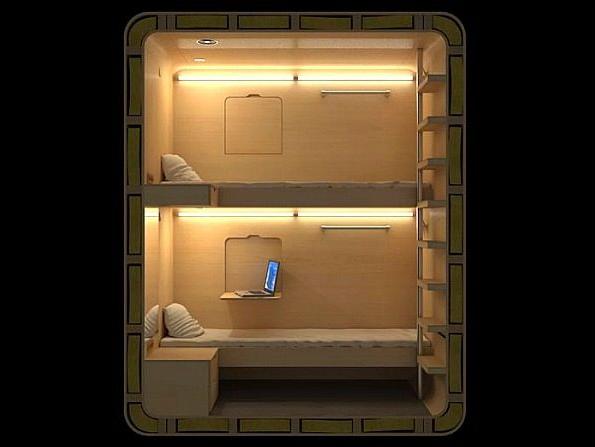
Rumor has it that Dubai Airport is installing 50-70 ‘Sleep Boxes’. Sleep Boxes are small cubicle spaces that are available at public places like Airports, train stations etc where people can book the ‘box’ for set time period to catch some sleep. It offers a small resting space while you wait for that connection in few hours. Ofcourse it doesnt come with attached washroom…you can use a public one for that. The concept is not new as Japan already has ‘Capsule Hotels’ that serve the same purpose. The only difference is that Sleep Boxes are bigger in size and give space to sit and sleep.

Sleep Boxes are designed by Arch Group [Russia]

SLEEPBOX is intended primarily to perform one main function – to enable a person to sleep peacefully. But it can also be equipped with various additional functions, depending on the situation. Application of the device can be very broad, not only in the form of paid public service, but also for internal purposes of organizations and companies.

* Size: 2 m x 1,40m x 2,30m to sleep in comfort and security.
* Cheap sleep in case of emergency for anyone rich or poor!!
* No time wasted looking for a hotel
* Designed to be installed at train stations and airports, and central public places or cities where accommodation is fully booked.
* In tropical climate countries the sleeper box can be installed outdoors in main streets.
* The space includes bed, linen, ventilation system, alarm. LCD TV, WiFi , space for your laptop and re chargeable phone. Under your bed and floor there is a cupboard for your luggage.
* Payment is made at terminals who will give clients an electronic key that can be purchased for 15 minutes or for as many hours as you need.

Don't they look neat!  Let's go and visit Dubai, now!

Dubai to get 100 pedestrian bridges by 2012

More than 100 pedestrian bridges by 2012 will include 47 metro station bridges when all the Metro stations on the Red and the Green Line open by the end of 2011.


Dubai will have more than 100 pedestrian bridges within the next two years, as stated in Gulf News.

The move comes as part of Dubai Pedestrian Safety and Mobility Action Plan launched by the Dubai Roads and Transport Authority (RTA) at the end of 2008. The plan involves infrastructure and policy improvements to create a safe walking culture.

The three-year-goal of the plan is to reduce pedestrian accidents by 30 per cent and achieve an increase of 20 per cent in pedestrian traffic by 2012.

"We are well on track as we will have around 100 pedestrian bridges in addition to tens of dozens of normal crossings by 2012 compared to 16 pedestrian bridges in 2007," a senior RTA official told Gulf News.

He added that the RTA built eight pedestrian bridges in 2008, bringing the total number to 22. The number of pedestrian bridges increased to 40 by the end of 2009, including the bridges linked to the Dubai Metro stations.

The official said that construction on at least 16 pedestrian bridges is on the cards. There are slight changes in the specifications and the completion time has been extended. The more than 100 pedestrian bridges by 2012 will include 47 metro station bridges when all the Metro stations on the Red and the Green Line open by the end of 2011.

Most of the new bridges will be air-conditioned and have escalators and elevators. Existing crossings will be replaced with new ones in phases.

"Our long-term vision is to have ‘zero fatalities' with regard to pedestrian fatalities from the road network," the official added.

According to RTA statistics, 69 pedestrians were killed on Dubai Roads in 2001. There were 145 deaths in 2007, which accounted for 44 per cent of the total road fatalities.

Pedestrian fatalities dropped 27 per cent to 106 in 2008 and fell to 70 in 2009, thanks to new pedestrian bridges and zebra crossings equipped with signals.

"Reduced pedestrian fatalities is a big achievement and we are well on target to make Dubai pedestrian-friendly city," said the official.

Pedestrians have been warned that crossing the road in undesignated areas, especially on a road that has a speed limit above 80 km per hour, carries a fine of Dh200.

Mattar Al Tayer, Chairman of the Board and Executive Director of the RTA said: "The excellent cooperation and coordination between the RTA and the Ministry of Interior, Dubai Police General HQ and driving institutes has resulted in a drop in traffic accidents fatality rate in Dubai from 21 cases per 100,000 of population in 2005 to about 12.7 cases per 100,000 cases of population in 2009."

Source

Countdown to the Dubai World Cup

It's the world's richest horse race attracting the creme de la creme of the racing community and it's back.

 Celebrating 15 years of racing action and off-track style, The Dubai World Cup is the "must-attend" event on the social calendar.

Recognised on a global scale as an annual event just as much about fashion and style as the racing, it's not only the horses who grab the limelight.

A new home, fancy new hotel, spa and restaurants, The Dubai World Cup also marks the official launch of Meydan - the shiny new race course which replaces Nad Al Sheba.

Expect an opening extravaganza featuring a sensorial, historical and emotional journey through Dubai's history, equine heritage and the creation of Meydan.

Better yet, look forward to a breath-taking firework display courtesy of Phil Grucci - the man behind the pyrotechnics at the Beijing Olympics and the opening of Atlantis The Palm.


Water scarcity and quality remain biggest problems

The biggest problem with water is, and will remain, scarcity and quality says Dr Rashid Ahmad Bin Fahd, Minister of Environment and Water
 
Dubai: UAE residents are still among the largest water consumers in the world, with a daily consumption of around 550 litres per day three times the global average, according to experts.

The biggest problem with water is, and will remain, scarcity and quality said Dr Rashid Ahmad Bin Fahd, Minister of Environment and Water. Speaking to commemorate World Water Day, Bin Fahd said water is essential for urban development and plays a fundamental role in life.

World Day for Water is celebrated by the General Assembly of the United Nations every March 22. The slogan being observed for 2010 is, "Clean Water for Healthy World".

The day aims to raise awareness on the sustainable ecosystems and human well-being and addressing the growing challenges in the field of water management in order to achieve better water quality.

"The issue of water quality and the rationalisation of consumption is not only the responsibility of the State and all its bodies, but also certainly the responsibility of all residents. Children should be taught within the family the importance of non-pollution of water and correct the wrong behaviours that cause waste and extravagance of this vital resource," he said.

"The emphasis is also on the private sector to conserve water and minimise pollution during industrial activities."

Bin Fahd added that governments, organisations and communities all over the world should be encouraged to assume proactive roles on this issue and act to prevent pollution and set up clean-up activities.

To save water the ministry has constructed 114 dams to store a capacity of 118 million cubic metres of water. It is estimated that 19.2 million cubic metres of water per year is needed to feed the aquifers with fresh water.
Desalination, a necessary but energy-intensive technology, produces 1.3 billion cubic metres of fresh water to meet the needs of the population and industry. Around 400 million cubic metres of water is produced from treated greywater to irrigate parks.

In collaboration with the International Centre for Biosaline Agriculture, the ministry is looking to develop fodder grown in saline water.

The Emirates Wildlife Society, in association with the World Wide Fund for Nature, which launched the ‘Heroes of the UAE' water campaign, urging residents to adopt simple tips to reduce their water wastage, just a few simple changes could save each household up to 46 per cent, or 252 litres of water per person.

Source

UAE facing 'water crunch'

by Peter Ward

The UAE is facing a water shortage and demand could outstrip supply by 2012, the Minister of Environment and Water has revealed.

Speaking exclusively to Utilities-ME.com at the launch of the UAE’s water conservation campaign, H.E Dr Rashid Bin Fahad revealed: “The UAE is also facing a water crunch, where there is risk that demand for water could outstrip supply by 2012, due to gas shortages. Increasing supply is only part of the solution and managing demand through water conservation also has a crucial role to play.”

The Minister also stated desalination will be the main source of household water in the UAE for the long term future, despite an integrated approach being taken for water resources.

“Desalination is our main source for water for the household. So it is a main source. We are looking at integrated water management. We have ground water and we have the reuse of wastewater which has been high in the last year. We are looking at all of the sources and not just desalination.”

In order to tackle this growing problem, the EAD and ADWEA have announced a scheme to install water saving devices in buildings in the Emirate. “EAD and Adwea will also be installing water saving devices for free in mosques, schools, commercial and government buildings, and households throughout 2010 in the Emirate of Abu Dhabi. These devices will reduce the water consumption of the Emirate by 30%, and will have a significant positive impact on the environment,” said Bin Fahad.

World's tallest hotel opens in Dubai

Rose Rayhaan by Rotana has been officially certified by Guinness World Records as the world's tallest hotel.

Dubai: Dubai broke another world record on Wednesday by inaugurating the tallest hotel.

Rose Rayhaan by Rotana has been officially certified by Guinness World Records as the world's tallest hotel.

At 333 metres it is five metres higher than its rival in Bangkok, and is located on Shaikh Zayed Road, close to the Dubai International Financial Centre.

Built by the Arabian Contracting Company, the hotel cost $180 million (Dh660.6 million).

Construction started in 2004 and was completed in April 2009.

"We were looking to create something different in Dubai," said Ayad Hamadi, Director of Engineering.

"We had a very small plot of land, only 10,000 square feet, and we had to think how we were going to build such a tall tower with such a limited area. The proportion of the height to the area was a big challenge," he said.

The hotel, which held its soft opening two weeks ago, has had room occupancy of 25 per cent, said Omar Kaddouri, Rotana's Senior Vice-President of UAE Operations.

It has 72 floors and has 482 rooms including suits and penthouses. However, the highest rooms are located on the 65th floor. From here one gets a wide view of Dubai and its famous landmarks such as the Burj Khalifa, The World and Burj Al Arab.

To draw more visitors, the hotel is temporarily offering low opening rates. "The opening rate of Dh400 a room is our biggest promotion," Daniel Mathew, General Manager, said.

Vantage point

The management also expects the location to help attract more customers.

"We're expecting it to get busy at the end of the month because we are approaching the Arab Health Congress from January 25 to 28, which is one of the largest trade shows in the health industry," Mathew said. "Because of our proximity to the Trade Centre, we are expecting a lot of customers."

"Being the tallest in the world isn't the only aspect and isn't what's going to make us fill up this hotel," Kaddouri said.

The Rose Rayhaan is also an alcohol-free hotel catering to families and residents of the Gulf Cooperation Council countries.

"Being a non-alcoholic hotel is an advantage because we have a niche in the market," Mathew said. "We attract people from the GCC, China and Iran."

Mathew said the management seeks 65 per cent average occupancy. "Some days will be busy, some will not. It's about how you get creative to balance your occupancy," he said.

Fast facts

* Rose Rayhaan is 333 metres high.
* It has 72 floors, but the highest floor for rooms is 65.
* It has 482 rooms.
* It has 8 meeting rooms, three food and beverage venues, a fitness club and an outdoor swimming.
* Around 300 employees work in the property.


Source