Can't find what you're looking for? Try Google Search!

Custom Search
Showing posts with label Dubai jobs. Show all posts

How To Get Busy During Ramadan in Dubai

Companies face the challenge of maintaining output whilst respecting beliefs:

Dubai: Generating high workplace productivity while helping Muslim workers observe the tenets of Ramadan can pose challenges for companies, experts say.

Reduced daily work hours for Muslim workers who are fasting can impact on output for business environments vying in a competitive global market place.

In the UAE, chapter four of the federal Labour Law, article No 65, stipulates that daily work hours will be reduced from eight hours to six hours during Ramadan, when adherents abstain from food and drink from sunrise to sunset.

"For employers in particular, religious observances such as Ramadan raise two competing interests: business continuity and performance on the one hand and cultural sensitivities on the other," Mandeep Kalsi, of the UAE business law firm Hadef and Partners, said.

"Forward planning will be key to ensure customer demand and business performance is maintained during the month," Kalsi said in a new report for Ramadan.

Pragmatic stance


"For many employers, a primary concern will be the impact of the reduced working hours rule on business performance. Adherence to the Labour Law is, of course, recommended but employers can still — and often do — adopt a pragmatic stance."

The report states that there are unavoidable corporate slowdowns during the fasting month.
"Business throughout the UAE inevitably slows down during Ramadan. Clients and customers who are based overseas, such as in Europe, are unlikely to appreciate this and it is therefore advisable to inform them of this sufficiently in advance of Ramadan."

That said, companies must also respect cultural sensitivities surrounding the month.

Gentler pace

"Out of respect for Islam and the traditions of the UAE, employers should also endeavour to ensure that life in the workplace moves at a gentler pace during Ramadan."

But the notion that Ramadan fasting and reduced work hours means a month-long holiday filled with idleness for Muslims is misplaced, says a top official of a company working to help Arabs boost productivity.
Mohammad Faris, CEO and founder of Productive Muslim, said that history teaches us Ramadan was a time of great achievement and industry.

"If we look into history, we learn that Ramadan was a productive time for the Ummah.

It is in this noble month that many great events occurred in the history of Islam like the victory of faith over disbelief in the Battle of Badr, the conquest of Makkah, Battle of ‘Ayn Jaaloot and other decisive battles," Faris told Gulf News from his Jeddah offices in Saudi Arabia.

"This indicates that there are many lessons of success to draw on from this month in the history of Islamic civilisation. In a similar manner, Ramadan is a time where Muslims must fight their own inner battles to gain victory of becoming better Muslims and more productive in order to have success in this life and the next."
Those who are observing Ramadan must work to dispel stereotypes through personal goals of becoming more productive, he said.

"Unfortunately, Ramadan today is being accused of being an ‘unproductive' month by many Muslim — and non-Muslim — employers working in the Muslim world.

"This misrepresentation of Ramadan is highlighted by the actions of some Muslims who unfortunately use Ramadan as an excuse to be lazy, not get work done, and follow unproductive habits such as staying up all night at cafes and restaurants, thus feeling sleepy during working hours.

Normal shift


"Moreover, some governments and businesses in the Muslim world in their attempt to cater for the needs of the fasting Muslims, reduce the business hours which further emphasises that Ramadan is a ‘time-off' period or ‘reduced workload' period, hence the low productivity output from employees in general."

"Personally, I'm against reducing business hours and find no merit in such measures, since we see many Muslims who live in non-Muslim countries and who work the normal 9-5 shift and are still productive.
"If anything, I personally believe that reducing business hours actually encourages unproductivity."

Fostering a spirit of productivity in workplace:

Dubai: Businesses can help foster a spirit of productivity in the workplace during Ramadan to help workers adhering to a no food-and-drink fasting regimen each day of the month.

And workers can take their own initiatives to usher in a healthier Ramadan that will make them stronger contributors in the workplace.

Mohammad Faris, CEO and founder of Productive Muslim, said he has helped businesses organise training workshops that teach everything from time management to personal productivity to give workers the edge.
"This is very important, as there are many sincere employees who want to work hard and be productive during Ramadan, but do not have the techniques or skills to do so consistently," Faris said.

"Businesses could arrange workshops with Muslim productivity experts to help their employees or they can encourage their employees to sign up to online courses that specialise in this sort of training."

Businesses must also adopt a co-operative approach with workers to ensure that deadlines are met and production does not slip.

‘Zero tolerance'


"Second, businesses need to encourage a resilient mindset among their fasting employees, for example, a mindset that whether it's Ramadan or not Ramadan, work has to get done and employees need to find a way to keep up with the work pace," he said.

"There should be zero tolerance to people who use Ramadan as an excuse for being lazy or unproductive, and signs of unproductivity or people using Ramadan as an excuse for being unproductive should be stamped out or rebuked publicly."

Health officials in the UAE are encouraging workers to take special care of themselves to help combat some of the taxing physical side effects of fasting such as headaches, dehydration and weight gain and insomnia during the hot weather in this Ramadan.

With Ramadan falling in mid-summer this year, days of sunlight are longer, testing the stamina of Muslims who must wait until sunset's iftar to end the fast.

"Ending the fast slowly with light foods such as soup, dates, water and milk and then later eating a balanced meal with moderate portions and plenty of vegetables in the evening followed by a simple morning meal of water, whole grain bread and tea/coffee before beginning the fast will help ensure that most people will eat healthily and enjoy all the benefits of Ramadan," Dr Regina Will, a gastroenterologist and specialist in nutritional medicine at the American Hospital Dubai, said.

Balanced Diet

"Of course, healthy fasting Muslims should moderate their intake of fatty foods and sweets after breaking the fast, but a range of balanced foods is fine. The key is to moderate the amount of food consumed after fasting and maintaining good hydration by consuming enough water, two to three litres per day," Will said.
Another critical element to ensuring top physical condition during Ramadan is getting enough sleep, said another health expert in Dubai.

"Some people sleep through the whole day and then stay awake at night, which is contrary to the meaning of fasting," said Dr Amro Al-Astal, from the Sleep Lab at the American Hospital Dubai. "Because of the long fasting hours and the Taraweeh prayers, which start every night after Isha prayers, we advise fasting Muslims to try to get their total sleep requirement in two sessions.

"The first one after Taraweeh [around 11pm] up to one hour prior to Suhour time [around 3.30am], then no more than one to 1.5 hours of sleep after Suhoor and morning prayers.

"In the afternoon, another one to 1.5 hours of sleep will give a second wind for the upcoming night. It is important that suhour meals should not contain too much fat as this might disturb sleep, and the stomach should not be full before a major sleep period."

TOP TEN TIPS

  • To help workers help themselves, Productive Muslim offers a ist for a more productive Ramadan:
  • Have sincere intentions and work hard for an ultimate productive Ramadan.
  • Plan each day of Ramadan the night before. Choose three important tasks you want to achieve the next day and record them in your diary.
  • Never EVER miss Suhour, wake up at least an hour before Fajr and have a filling, balanced meal.
  • Start working on your most important tasks right after Fajr and get at least one or two done.
  • Try to take an afternoon nap, not more than 20 minutes, either just before or after Dhuhur.
  • Plan your Ramadan days (and life) around Salah times, not the other way round.
  • Block at least one hour for reciting the Quran each day.
  • End your fast with dates and milk or water, go to Maghreb prayers, then come back for a light meal.
  • Give lots of ‘physical sadaqah'; get involved in organising community iftars, charity drives, helping orphans etc. Earn rewards working for others.
  • Don't miss an opportunity for Dawah. When someone asks you why you're not eating, give them a beautiful explanation of Ramadan and Islam.


Source

Focus: Gender Equality


They’ve moved into the CEO’s seat, but are women truly equal in the workforce? A survey recently conducted by bayt.com, an online recruitment website, tried to gauge the level of gender equality in the region’s work force. While 68 per cent of women in the Middle East and North African region felt they were treated equal to men at work, 31 per cent felt they received lesser pay.


So, if the attitude towards women in the workforce has apparently changed, why do some women feel it does not reflect on their salaries? This week, Gulf News readers joined a debate on gender equality in the workforce and debated whether there is still some work that needs to be done. Post your thoughts on our Facebook page ‘Gulf News Al Nisr Publishing UAE’ or send them to readers@gulfnews.com.

14:06 GULF NEWS: THE ATTITUDE TOWARDS WOMEN HAS CHANGED BUT THE SALARY HASN’T.

14:07 Fatima Khan: Contrary to popular belief that women are paid less, the bayt.com site brought out some interesting statistics. The Wall Street Journal reported in September last year that the earning power of young single women has surpassed that of their male peers in metropolitan areas around the US, a shift driven by the growing ranks of women who attend colleges and move on to high-earning jobs.

14:07 Mary Mae Villarubia: I think it also depends on your position in the company. Not all are given opportunities.

14:10 Sunil Roy: Women have started playing a major role in organisations across the globe. The disparity in salary is definitely not correct. People should be paid according to what they contribute rather than on who they are.

14:10 Ramachandran Nair: In general, women workers are still considered dependent, hence many of their entitlements are taken away. The concept needs a change here. Ever since women started taking responsibilities and being assigned to responsible positions, massive changes have been evidenced in the overall attitude towards them; which is quite positive and should be encouraged. However, when it comes to salaries and benefits, organisational culture and traditions are some of the factors that still push women back.

14:13 Maha Abidi: Management generally plays a role here. If they are good and do not discriminate between men and women, then all is well.

14:14 GULF NEWS: WORKING WOMEN THINK THEY HAVE LESS CHANCE OF BEING PROMOTED THAN THEIR MALE COUNTERPARTS.

14:16 Ramachandran Nair: It is a wrong perception. The modern work atmosphere has changed massively as being promoted is purely based on overall performance supported with one’s dedication and sincerity.
14:18 Mary Mae Villarubia: I don’t think so. If the management knows you deserve to be promoted why would they block the promotion? This is not true. Based on my experience and observations, women are promoted even when their bosses are men.

14:18 Anureet Kaur: I think it depends from situation to situation; as for Dubai I don’t think this is a problem. For example, there are so many Emirati women, like filmmaker Nayla Al Khaja who have been acclaimed for their award-winning movies. They don’t need any promotion; and yet they work.

14:19 Sunil Roy: I feel that this is just a perception. The perception may be due to basic insecurity. Today, it is quite difficult for decision-makers to overlook a person, be it a woman or a man, if their performance is good.

14:21 Mathew Litty: One of the main differences between men and women is that men tend to speak up about their career goals, and women think their performance will speak for itself. The one who usually gets the promotion is the one who wants it most and asks for it.

14:24 GULF NEWS: MOST WOMEN PREFER TO WORK UNDER A FEMALE BOSS.
14:25 Maha Abidi: May be they can communicate well [with a woman] and if they have problems with the work or the environment, it can be sorted out well, too.

14:26 Fatima Khan: Some women feel a certain comfort level under a female boss. It is the same case with men preferring to work under a male boss. However, with changing times people are adjusting to the changes.
14:29 Sunil Roy: I have worked under both men and women. Though the working styles were different the ultimate results were the same. I feel it is the person who makes the difference. To a large extent, it also reflects on how as an employee you live up to the overall organisational goals and objectives .

14:32 GULF NEWS: MOTHERHOOD DOESN’T IMPEDE PERSONAL CAREER GROWTH.

14:35 Mary Mae Villarubia: Motherhood has never been a hurdle, it is in fact a way to help you climb the ladder. Your children are your support and a key to becoming a successful working mum.

14:35 Mathew Litty: We should recognise motherhood as an extremely important job, but it is one that is unfortunately devalued in society. A child’s mother is meant to be the pillar of that child’s progression through life. She is supposed to teach and care for that child and it takes a great deal to be a good mother. These women are educated in a premier university and have made excellent decisions in life that contribute to well thought-out plans for their families.

14:37 Fatima Khan: Motherhood doesn’t necessarily impede personal career growth. Marriage may be a bigger hurdle because one has to adjust with a new environment. However, motherhood just adds joy to the comforts at home.

14:38 Fatima Yousuf: I think if a woman has taken a responsibility to take care of their house and work, she should be able to balance both. Children do need a mother, so women have to equally split the time between work and their personal life, as both are important.

14:39 Mathew Litty: Accepting a woman’s roles and choices, regardless of what those are, is important. The women’s movement was meant to open new doors, not close old traditional ones that may still be extremely important in our society.

50 ways to find a new job

By Graham Snowdon, Guardian News and Media Limited

Planning a career shift may seem daunting. But with the right attitude and expert advice you can't go wrong.


Changing careers isn't easy but it helps to know where to start, who to target and how to succeed at interviews. Here are some tips:

1. Make the first move

"List out career options you think you would really enjoy, not just the ones you think you can do," says Catherine Roan, managing director of career change consultants Careershifters.org. "Research how others moved to these careers."

2. Think about things you're good at

Tanya de Grunwald, founder of GraduateFog.co.uk says: "A good job search should start with you, not your CV. Are you an ideas person? Are you good at explaining things? Look closer and you'll find moving towards jobs you'll enjoy."

3. Think about the skills you have picked up

Is there crossover between what you are good at and the skills you have? If so, use these lists to help identify the types of jobs and industries you are most suited to.

4. Do your homework

"Many careers sound exciting when you only know a little about them," says Dr Rob Yeung, executive coach at consultancy Talentspace. "Make sure you know what's boring about a job and what's great."

5. Dip your toe before taking the plunge

"Research what it entails, what training you may need and talk to people doing that job," Roan says. "If possible, try it out part-time or shadow someone in the role."

6. Tidy up your CV

Talk to recruiters to establish what they consider to be an above-average CV. Consider asking a CV-writing agency "but only if it comes recommended by someone you know," says Rowan Manahan, author of Ultimate CV: Trade Secrets from a Recruitment Insider.

7. Create your own marketing pack

"Choose a high-quality paper with matching envelopes," says James Innes, author of The CV Book, The Interview Book and Brilliant Cover Letters. "A co-ordinated image can really impress; it's a small investment which could pay huge dividends."

8. Don't go over the top

"Razzmatazz won't help you be taken seriously," advises Rebecca Corfield, author of Knockout Job Presentations. "Be unforgettable for the right reasons. Impact comes from strong words, having a clear and logical layout, and detail about what makes you special."

9. Have some trusted friends give you feedback

"When you've been tinkering with your CV for hours it's easy to miss glaring typos, so make sure someone else has seen it," says De Grunwald. "The best people to canvass are those already working in your chosen industry."

10. Include a cover letter

"Many people lose out not because of their CV but because of their cover letter — or lack of one," Innes says. Create a template cover letter and modify it to suit your needs.

11. Consider a video CV

Go for this if you are in a technical field. But be careful, it's easy to do this very badly. "Produce a 30-second, a 90-second and a 5-minute piece and make sure the channel — YouTube or Vimeo — reflects the professional image you are seeking to cast and track viewing stats closely to assess if your approach is working."

12. Customise your CV

"Put yourself in the shoes of each recruiter and make sure you've emphasised the bits they'll be most interested in," De Grunwald says. "Don't use jargon and if your former employers aren't well-known, explain briefly the nature of each."

13. Where and how to look

Search online by area and job title, and repeat your search every day. "The methods that pay most dividend are Google Alerts for the wider market and manually tracking specific companies you would like to work for," Manahan says.

14. List organisations you would like to work for

Visit their websites and look for employment information — you may find jobs that don't appear elsewhere online.

15. Look under your nose

While many large firms use the internet to find employees, most small businesses do not. A local paper can still be a useful place to find jobs in your town.

16. Cast the net wide

"Difficult times require more creative solutions and you will find more options this way," Corfield says. "Don't be put off by commuting. It can provide time for reading, learning or just thinking."

17. Aim high and low

Apply for jobs above and below the level you are working at. It's hard to generalise but particularly if switching careers, you need to be realistic about the level of opportunity that may be open to you.

18. Apply to unconventional places

You may assume your local hospital, for instance, doesn't have any jobs you would be suited to if you aren't a healthcare worker — but you might be wrong. "Most large organisations have admin, IT and HR staff," Corfield says.

19. Look out for scams

Scams encompass everything from "work at home" to "pay for a list of jobs". "Some agencies trawl for good CVs and approach companies with the claim that they have the cream of the market," Manahan says. "Make sure the advertisement you're responding to is a real job."

20. Build an online profile

Put your CV online. Download it and see how it looks and make sure it prints out the way you want it to.

21. Use a universally accepted document format

"PDF or Word-compatible are the best," Innes says. "If your CV is in a different format, you're reducing the chances of someone being able to access it."

22. Use the right keywords

The goal is to have your CV pop up at the top of the list when a potential employer searches for those keywords. "Gather as many job-description and person-specification documents as possible as you proceed with your search," Manahan says.

23. Become an expert in your field

"Think about articles you could write for trade journals, blogs and other opportunities to build credibility in your field," Yeung says.

24. Build online profiles

"For findability, it's hard to beat a good profile on LinkedIn," Manahan says. "Start the profile privately, hone it and go public to reach a wider audience."

25. Keep your profiles accurate and up-to-date

"Employers frequently use the internet as a quick and easy means of checking up on applicants. Don't get caught out," Innes says.

26. Behave yourself online

If you use a more general social networking site, such as Facebook or MySpace, be careful to present yourself in the best light and make sure privacy settings prevent casual viewers from seeing your full profile.

27. Be old-fashioned

Many employers are geared up to receive applications online but sometimes, submitting your application and following up by phone is the best approach.

28. Marshal your resources

"In a healthy market, 55 per cent of jobs beyond graduate/entry-level positions will be filled through some level of personal contact and in an unhealthy market the figure is higher," Manahan says. "Let people know what you are looking for."

29. Ask for a referral

If you know someone who is leaving a job which feels appropriate, ask them to put in a word on your behalf. You may be able to apply for the position before the company readvertises the opening.

30. Make use of any resources your former employer offers

If you have been laid off, consider accepting any assistance offered by your employer with CV help, retraining or career counselling. "It can help you start on the next phase of your career," Corfield says.

31. Apply for benefits

If you are eligible, apply for unemployment benefits right away, even if you think you will land a new job.

32. Be professional

Treat your job search like a job in itself. "Finding a new job, especially if you are changing careers, is not easy. It can seem an overwhelming task at times. Keep busy and you'll get there," Roan says.

33. Get a sensible e-mail address

"Set up a separate address for career management and point your social networks to that address. Set up a professional signature on your e-mail account that shows your address, phone and key online sites."

34. Be easily contactable

The phone number you put on your CV should be one you can either answer immediately or one that has voicemail.

35. At the interview

Be prepared for common questions such as "Where do you see yourself in five years?" or "What are your strengths and weaknesses?" Have the answers to such queries up your sleeve.


36. Rehearse to a live audience

"Express yourself in an articulate fashion by asking a friend to throw likely questions at you," Yeung says.

37. Create an "elevator speech" about yourself

"Get ready to talk about your skills and experience," Corfield says. "How does your personality fit? What is your vision for the job? Why are you the best person to do it?"

38. Turn the tables on your interviewer

"Try to find out as much as you can about your interviewer," Innes says. "You will have a head start."

39. Free the skeletons in your closet

Be prepared to address the six-month gap in your employment history or the reason why you suddenly had to leave your last position.

40. Be honest

Don't claim to have degrees or experience you don't.

"Remember that many organisations check references," Yeung says. "Any inconsistencies could lead to an employer rescinding a job offer."

41. A class apart

Dress appropriately. Presentation can make the difference in whether or not you are hired or even the salary you are offered. "Dress at least as well as you would when actually turning up to do the job — preferably better," Innes says.

42. Be nice to everyone you talk to

This is especially true when you aren't sure who they are. "I once assumed the girl who greeted me and asked if I wanted a coffee was a secretary — but when she sat down and started the interview I realised she was the boss," De Grunwald says.

43. Be on time

Phone in advance to confirm time, place and directions. Scout out the location in advance to check parking, transport and cafés. "If you are late, phone and offer to reschedule but don't expect to be taken as seriously as the candidate who showed up on time," Manahan says.

44. Send a thank-you note

Follow up an interview with a brief courtesy message (an e-mail will do) a few days later. Not many applicants bother with this and it will keep you at the front of an interviewer's mind.

45. Don't pester an interviewer

Waiting to hear back after an interview can be stressful but resist the temptation to bombard your potential employer with e-mails and phone calls. Let the process run its natural course.

46. Take the long view

Get in touch with your old college. Find out whether it has an alumni job-placement scheme. "If you're serious about finding work you should leave no stone unturned," De Grunwald says.

47. Take some classes

"You need to show you wants to learn new things," Corfield says. "Practical skills can increase confidence, languages can widen your world and academic subjects will boost your CV."

48. Think about the future

"Some industries are likely to have huge demands for jobs in future," Roan says. "Do your research to find out where these vacancies will be and if you would be interested in working for."

49. Create your own job

Consider starting your own business, either consulting for your present field or doing something new.

50. Don't give up

"Remember you are not alone," Roan says. "Many people have been where you are. Believe in yourself, be clear on what you want and keep going."

Sleep Boxes in Dubai, what's next?

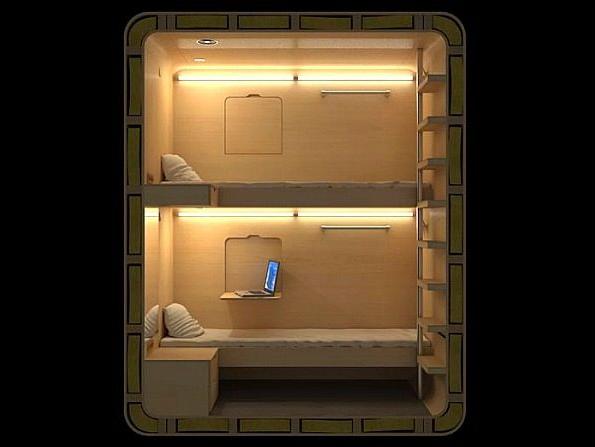
Rumor has it that Dubai Airport is installing 50-70 ‘Sleep Boxes’. Sleep Boxes are small cubicle spaces that are available at public places like Airports, train stations etc where people can book the ‘box’ for set time period to catch some sleep. It offers a small resting space while you wait for that connection in few hours. Ofcourse it doesnt come with attached washroom…you can use a public one for that. The concept is not new as Japan already has ‘Capsule Hotels’ that serve the same purpose. The only difference is that Sleep Boxes are bigger in size and give space to sit and sleep.

Sleep Boxes are designed by Arch Group [Russia]

SLEEPBOX is intended primarily to perform one main function – to enable a person to sleep peacefully. But it can also be equipped with various additional functions, depending on the situation. Application of the device can be very broad, not only in the form of paid public service, but also for internal purposes of organizations and companies.

* Size: 2 m x 1,40m x 2,30m to sleep in comfort and security.
* Cheap sleep in case of emergency for anyone rich or poor!!
* No time wasted looking for a hotel
* Designed to be installed at train stations and airports, and central public places or cities where accommodation is fully booked.
* In tropical climate countries the sleeper box can be installed outdoors in main streets.
* The space includes bed, linen, ventilation system, alarm. LCD TV, WiFi , space for your laptop and re chargeable phone. Under your bed and floor there is a cupboard for your luggage.
* Payment is made at terminals who will give clients an electronic key that can be purchased for 15 minutes or for as many hours as you need.

Don't they look neat!  Let's go and visit Dubai, now!

Don't they know it's Friday?

That’s the title of the book I first read when I arrived in UAE. It gave me some pointers what would be the culture I was getting into. The book suggests how and what non-Arabs should do, or shouldn't do in certain situations. Also, Friday is the 'holy' day of the week in the Gulf. You will never find any Muslims working on this day. Friday and Saturday is our weekend here. The book is a must read for those who want to work and live in the United Arab Emirates.

I found it amazing really to hear ten different languages in my new job everyday, from colleagues when attending orientations, meetings, or just have plain chitchats at the cafeteria. For my first few months in Dubai, I felt I didn’t have the time to be homesick as I knew that there were plenty of things to learn; new culture to adapt to, new language(s) to understand and to get used to, lots and lots of new people and colleagues to get to know, and a very new environment to explore. I was so excited.

I didn’t have any mobile phone yet, so I had to look for a phone booth to call home and let them know that I arrived in Dubai safely.

Anyway, during our company orientation, the first things we were told was, we, especially women, should try to avoid wearing all those sandos and shorts when visiting the malls or walking downtown. They warned us that, although, the government of UAE was not really that strict when it comes to dress code, unlike in Saudi Arabia or Kuwait, expatriates were expected to respect the Arab culture and should not wear something indecent on the streets. We were not also allowed to take photos of local people here unless you have their consent.


Showing the public you're drunk is a bigtime foolish act here, but if you don't mind spending sometime in jail, that's okay. Dubai is very friendly when it comes to entertaining its visitors, because they also have bars and discos in the hotels, and even have Hard Rock Cafe along Sheikh Zayed Road. One of my Polish colleagues returned to Dubai from his vacation with high level of alcohol in his blood test. Maybe, he finished all the liquor bottles on the plane. How did the authorities find out? He just collapsed on the street, and of course, he's taken to the hospital. When he woke up, the police were already there waiting for him. He stayed in jail for one month. His head was shaven. And oh, I don't know if he received some lashes. Moral lesson of the story, you can get drunk here, but be discreet. Salaam!

The photo here shows where I used to work.